







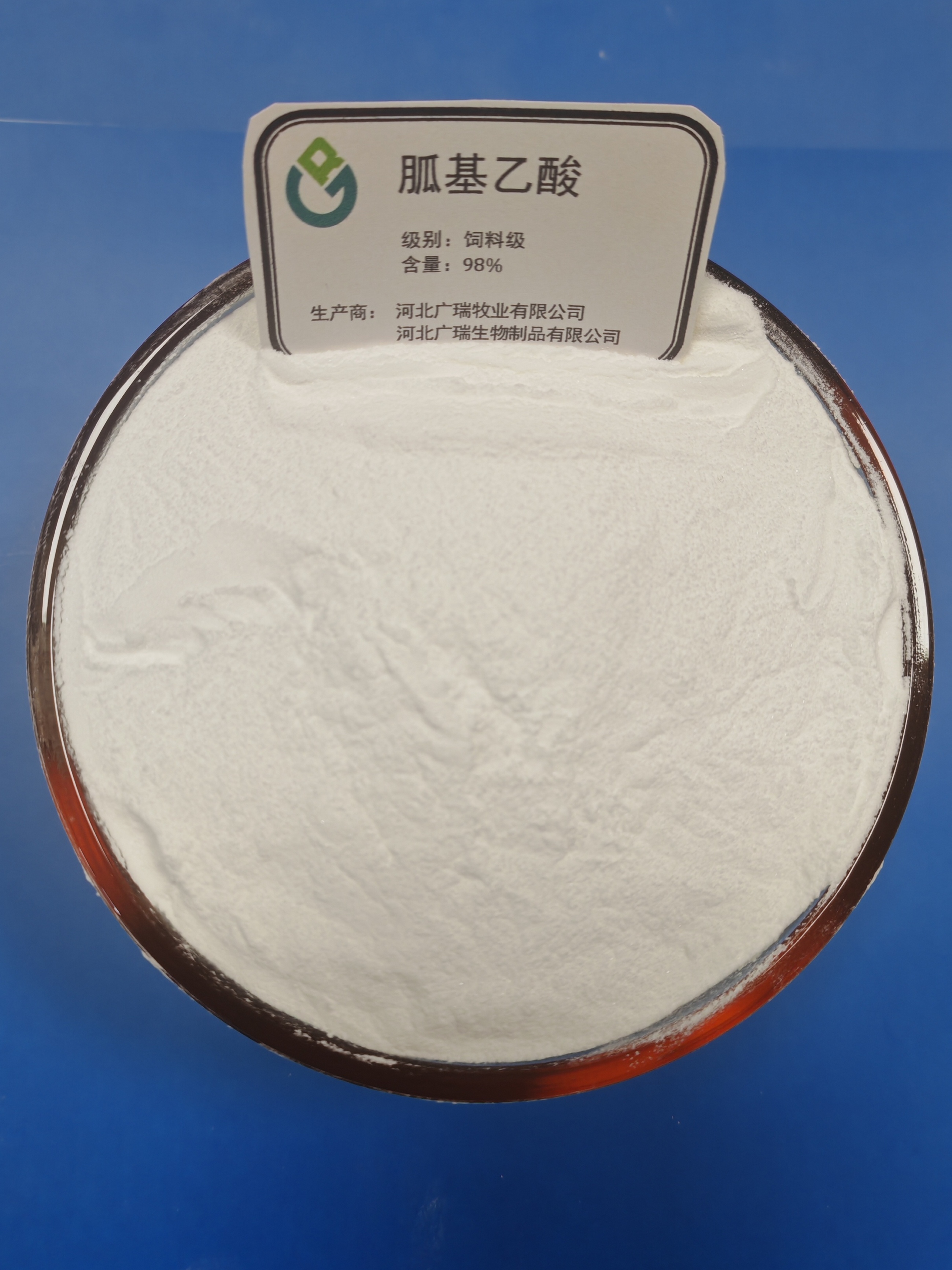
Guanidinoacetic acid
Supplier

河北广瑞生物制品有限公司
HEBEI GRANRAY BIOPRODUCTS CO.,LTD
Description
Glycocyamine
Product Overview
English Name: Glycocyamine
Synonym: Guanidinoacetic Acid (GAA)
Molecular Formula: C₃H₇N₃O₂
CAS No.: 352-97-6
98% Pure Glycocyamine for Improved Lean Growth and Body Composition
Glycocyamine promotes protein synthesis and helps improve lean meat yield. Creatine is an essential nutrient that may be limited in diets based entirely on plant proteins, while glycocyamine serves as a precursor for endogenous creatine synthesis. Therefore, glycocyamine can be particularly effective in plant-based diets and may partially replace animal-derived protein sources such as fishmeal and meat-and-bone meal.
Key Ingredients
Glycocyamine (guanidinoacetic acid), a functional nutritional additive that supports animal growth and performance. The product contains no prohibited substances or toxic or harmful ingredients and is safe for use without a withdrawal period.
Appearance
White to slightly yellow powder. The use of different carriers may result in variations in color, but this does not affect product performance or functionality.
Mode of Action
Glycocyamine is a precursor to creatine. Creatine phosphate, which has a high potential for phosphate-group transfer, is widely distributed in muscle and nervous tissues and serves as a major source of readily available energy in animal muscle.
Supplementation with glycocyamine increases the body's capacity to synthesize creatine phosphate, thereby supporting efficient energy supply to high-demand tissues such as muscles, the brain, and reproductive organs. This helps facilitate continuous energy delivery to muscle tissue and supports muscle development and performance.
Product Benefits
1. Supports Improved Body Composition
Creatine phosphate is present in high concentrations in muscle and nervous tissues but only in very small amounts in adipose tissue. Glycocyamine supplementation therefore helps direct more available energy toward muscle tissue, making it particularly beneficial for improving body composition in lean-type pigs.
It can contribute to a broader back and a fuller, firmer hindquarter.
2. Promotes Growth in Livestock, Poultry, Fish and Shrimp
As a stable and highly absorbable precursor to creatine, glycocyamine helps direct more energy toward muscle protein synthesis.
-
Average daily gain (ADG) in livestock and poultry: increased by more than 7%
-
Growth rate in fish and shrimp: increased by more than 8%
-
Pigs at 50–100 kg: feed-to-gain ratio reduced by approximately 0.2
-
Finishing pigs: market weight may be reached 7–10 days earlier
-
Feed savings: more than 15 kg per pig under applicable feeding programs
3. Stable and Safe for Use
Glycocyamine is ultimately metabolized and excreted from the animal as creatinine. It does not accumulate in the body and has no known toxic or adverse residual effects when used as directed, providing a favorable safety profile.
4. Helps Reduce Oxidative Stress and Support Meat Quality
Creatine supplementation may help reduce mitochondrial free-radical generation and support improved meat color and muscle quality. It also supports ATP synthesis in muscle tissue, helping animals better cope with heat and other stressors associated with handling, transportation, regrouping, and environmental changes.
Recommended Use
1. Particularly Suitable for Plant-Based Diets
Because glycocyamine can partially replace animal-derived protein sources such as fishmeal and meat meal, it is particularly suitable for livestock and poultry diets formulated primarily or entirely with plant-based protein sources.
2. Recommended Economical Inclusion Rate
| Animal Category | Recommended Inclusion |
|---|---|
| Growing/finishing pigs | 500–800 g |
| Ruminants | 800–1,500 g |
Dosage should be adjusted according to the animal species, diet composition, production stage, and feeding program.
Directions for Use
-
Add directly to the existing feed formulation at the feed mill or farm.
-
Mix thoroughly and evenly into the complete feed.
-
Use promptly after opening.
-
Ensure animals have access to an adequate supply of clean drinking water.
-
For optimal results, use in combination with methyl donors such as methionine or betaine, with continuous supplementation for at least 40 days.
Storage
Store in a cool, dry, well-ventilated place away from direct sunlight. Keep the package tightly sealed when not in use.
