







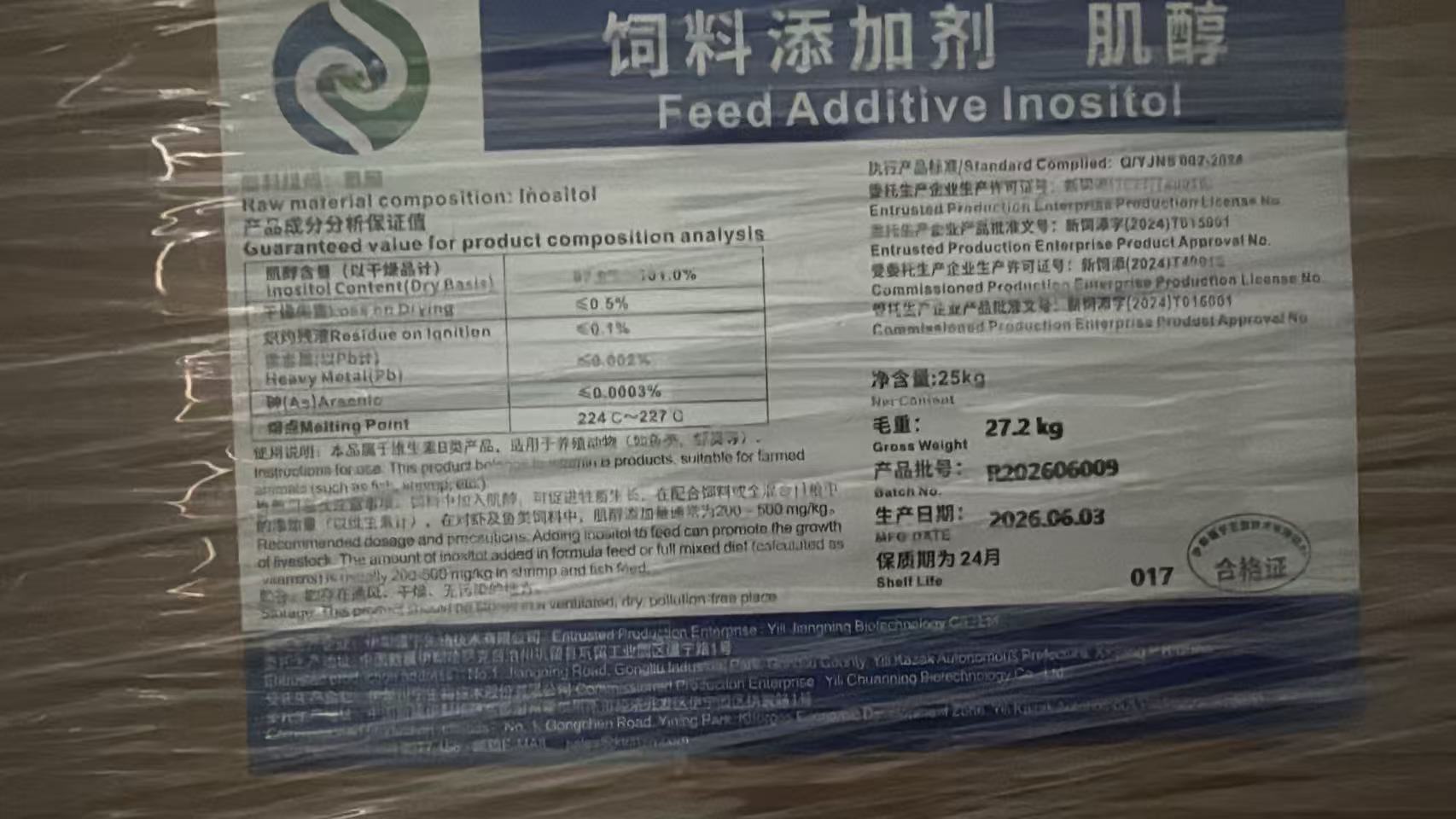
Chuanning Biological Feed Additives Inositol
Supplier
伊犁川宁生物技术股份有限公司
Yili Chuanning Biotechnology Co., Ltd.
Description
Inositol is a vitamin-like substance whose core function is to serve as a biosynthetic precursor of phosphatidylinositol and very-low-density lipoprotein (VLDL), promoting the transport and metabolism of fat in the liver and effectively preventing fatty liver—this is particularly critical in high-producing laying hens, fast-fattening meat poultry, and finishing pigs; meanwhile, inositol trisphosphate (IP3), generated after its phosphorylation, is an important intracellular second messenger involved in signaling regulation such as hormone response, nerve conduction, and cell differentiation. In aquaculture feed, inositol also plays a key role in osmoregulation, helping fish, shrimp, and crabs maintain body fluid balance under stress conditions such as salinity fluctuations and water changes, and significantly promoting molting, metamorphosis, and survival of crustacean larvae. In addition, by maintaining the integrity of the cell membrane phospholipid bilayer, it synergizes with the glutathione system to exert antioxidant effects; under heat stress and high-density farming conditions, it can reduce cortisol and improve immune parameters, making it an easily overlooked but highly cost-effective functional additive for scenarios with a high incidence of fatty liver and for aquatic larval/fry feed.
